












Paid Services




Krishna Janmashtami 2017: Gokulashtami Festival Celebration
Krishna Janmashtami
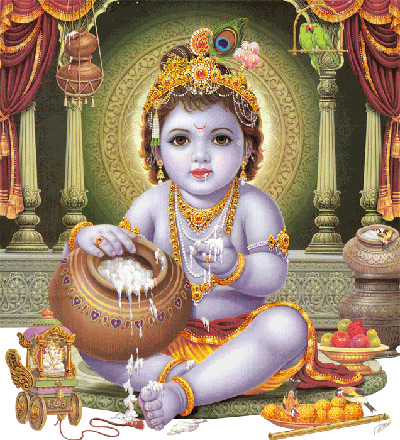
Krishna Janmashtami is celebrated to memorialize the birth of Lord Krishna. According to our Scriptures, Dwapara yuga was ended and Kalyug was started on this day. According to the Gregorian Calendar, it will be observed on 14th August 2017. On this day, devotees observe fast and worship Lord Krishna. Lord Krishna was the 8th incarnation of Lord Vishnu on the earth. Stay reading this article to know more..
Krishna Janmashtami Celebration
Janmashtami is celebrated as the birth anniversary of Lord Krishna. The festival of Janmashtami is celebrated with immense enthusiasm generally all across India and particularly in Braj area and around the area of Vrindavan which in terms of location is situated towards south of Delhi. The place is characterised with pertinent feature of having 5,000 temples where the sounds of celebration constantly resound. Vrindavan was the place where Lord Krishna spent his childhood. Interestingly, the place has retained the traits of a village namely narrow streets, baked households, traditional mode of transport so on and so forth. The village had once belonged to cowherds and still the Hindus who live here revere the cows.
The actual birth place of Lord Krishna is a grand temple acknowledged as Krishna Janma Bhoomi Mandir. Inside the Janma Bhoomi Mandir, there is a statue of Lord's idol placed in sanctum sanctorum also known as the ‘Garbha Griha’. Mathura has over 400 temples dedicated to Lord Krishna. In Mathura, all the Janmashtami celebrations are held at this temple. Disciples decorate the temple and their home on this festival of Janmashtami to welcome the deity with passion and enthusiasm. They set swings and little tableau of the old Mathura and Gokul where he was brought up, tableau of janmashtami portrays every major and minor events of Lord Krishna's life. This tableau of Janmashtami is very much popular among children as well as among elderly.
The Journey Of Janmashtami Celebrations & Stages Ahead
Celebration of janmashtami festival spreads over two days when on the first day disciples observes fast while decorating tableaus which is followed by a feast at midnight when Lord Krishna is born and the second day when the birth is generally celebrated with several other activities like religious songs, dance, plays etc. Essential is to remember the various kinds of tableaus which depict the various stages of Life of Lord Krishna. Tableaus are a common sight during Janmashtami all over Mathura city. It's important to note that these tableaus depict various important activities of Lord Krishna right from his childhood like Janam Leela, Shankar Leela, Putanalila and Naglila.
Upon birth the idol of Lord Krishna is bathed with milk and curd and then the cradle is rocked. Mathura particularly is blessed with beautiful celebrations with the entire city engulfing into the festival with joy and vigour. It’s firmly believed that on Janmashtami disciples makes wishes while rocking the cradle and it is believed that the wishes made are always fulfilled. It is suggested that every year about 8 lacs devotees turn up in Mathura on this occasion of Janmashtami and the number is increasing gradually.
As a ritual practise the celebration includes feeding the Lord with the customary prasad of ‘Chhapan Bhog’ which amongst other Janmashtami special dishes include Kheer, Laddoo, Butter, Shrikhand and Singhare ki Poori.
The Performance of Raas Leela
Raas Leela is a form of dance drama which is performed at various places during Janmashtami, both by professionals as well as amateurs. The artists playing the role of Lord Krishna take the divine form and portray his life with the aid of a well structured script. The so called play travels through the entire life of Shri Krishna with specifically highlighting the important events.
Krishna Janmashtami Jhulanotsav and Ghatas
Aforementioned celebrations are thus followed by Jhulan Utsav and Ghatas. These are the special feature of this extravaganza, amazingly these two expanded gala can only be seen in Mathura of the Mathura. During Jhulan Utsav, as per the term defines various swings are placed in courtyard of temples and houses of the devotees too, to welcome Lord Krishna's birth. It symbolizes the cradle of Lord Krishna. Swings are decorated beautifully with flowers and bells to go with the festive feel.
The interesting thing to know is that it is only the Mathura city that during Jhulan Utsav, the swings are set in courtyard of the temples and all the houses to cherish the birth of Ladoo Gopal. The swings are decorated with beautiful flowers and bells to give a festive look.
The commemoration of Lord Krishna's birth is incomplete without Ghatas, another month-long exclusive feature of Mathura, wherein all the temples of Mathura City adorned in a similar way (i.e. colour) as per the selected theme. Even The idol of Lord Krishna is decorated and bejewelled with the costumes and jewellery of same colour. Devotees put their and heart and soul in decorating the temples and their house to welcome the birth of Lord Krishna.
Devotees from all around the world gathered at the holy city Mathura to celebrate this auspicious festival, it has been seen followers beyond counting visit the birth city Mathura during Janmashtami. The figure, however, keeps mounting every year. All the temples at Mathura during this extravaganza witness long queues and it becomes quite a task for the security to maintain law and order.

 Buy Today
 Best quality gemstones with assurance of AstroCAMP.com More
 Take advantage of Yantra with assurance of AstroCAMP.com More
 Yantra to pacify planets and have a happy life .. get from AstroCAMP.com More
 Best quality Rudraksh with assurance of AstroCAMP.com More
Get your personalised horoscope based on your sign.