|
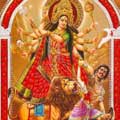
Navratri in 2012 is on 23 March. During this festival, Navratri songs are sung and people perform Navratri Puja. Navratri, is one such auspicious festival that is celebrated for nine days. Navratri literally means nine nights. It is one of the most important Hindu festivals.
|
|
|
This is a bathing festival, and takes place on the 13th day of the decrease of the moon in the month Chaitra. When it falls on a Saturday, and the star Sota Bhissa is then on the meridian, it is called Maha Baruni; and again, if the star Shuba Jug is in conjunction with Sota Bhissa, it is called Maha Maha Baruni.
|
|
|
Burwa Mangal celebrated on the first Tuesday after the Holi, burwa Mangal is majorly celebrated in Varanasi with sundry modifications of a not uninteresting description. During the day the people go in crowds to a holy place called Durga kunda, a large pond and temple dedicated to goddess Durga, who is worshipped on this occasion.
|
|
|
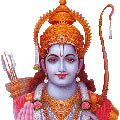
Sri Ramnavami is a grand hindu festival, celebrates the birth of lord ram, Ram is the 7th incarnation of dashavtar of Lord Vishnu.
|
|
|
|
Ghentu Puja is a Bengali festival held on the last day of Phalguna (February and March). Ghontu is an inferior deity, the god of itch and other skin diseases. Crookes gives the following account of the festival:
|
|
|
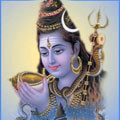
Maha Shivaratri 2016 date is 07 March, Tuesday. Maha Shivaratri in 2015, like year after year, is celebrated with great joy and fervor. Mahashivaratri celebrated on the fourteenth of the lunar month Phalguna. This, in the estimation of the followers of lord Shiva, is the most sacred of all their observances, expiating all sins, and securing the attainment of all desires during life, and union with Siva or final emancipation after death.
|
|
|
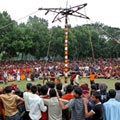
It is said that an ancient king, by reason of his great austerities, obtained an interview with Siva, in commemoration of which this festival is held. The peculiarity of the worship consists in the fact that the devotees of Shiva belonging to the lower castes assume the profession and dress of Sannyasis for a week or ten days, and march about the streets soliciting alms from people.
|
|
|
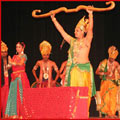
Ramlila is a dramatic representation, very popular in North India, of the victory of lord Rama over Ravana and the recovery of Sita. An enclosure is made of bamboos, covered with paper and painted to represent a fortress. Within it is a frightful paper giant, fifteen feet high with ten or twelve arms, each grasping a sword, a bow, a battle-axe or a spear. At his feet is Sita sitting disconsolate, guarded by two figures to represent demons.
|
|
|
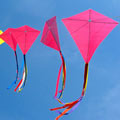
Uttarayana fall on the first of (solar month) Magha, first lunation dark half or Moon's wane of Pausha or Magha, 12th-13th of January.
|
|
|
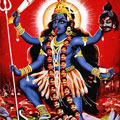
Kali Puja is celebrated in honour of the goddess Kali, who is a form of Durga.
|
|
















 Buy Today
 Best quality gemstones with assurance of AstroCAMP.com More
 Take advantage of Yantra with assurance of AstroCAMP.com More
 Yantra to pacify planets and have a happy life .. get from AstroCAMP.com More
 Best quality Rudraksh with assurance of AstroCAMP.com More